
Stop, Look, and Listen #59
A round-up of what I have been reading and listening to this past week.

Please support my work by becoming a free or a paid subscriber to the newsletter. Paid subscribers are vital to me being able to continue producing and expanding this newsletter.
You can also support my work by making a one-off payment, at a price you consider affordable.
This post is part of the newsletter’s ‘Stop, Look, and Listen’ series, a digest of articles and podcasts that I’ve found engaging and insightful over the past week.
Five things to look at
For Liberal Currents, Kiran Pfitzner countered US Defence Secretary Pete Hegseth’s disavowal of diversity in the American military, highlighting how the intertwined rise of nationalism and liberalism from the late 18th century enabled the development of mass armies by giving citizens a stake in the countries they were fighting for.
Farouk Kannout meditated in this article for RogerEbert.com on the way recent horror movies Obsession and Backrooms allegorise the threats of artificial intelligence, in the guises of dehumanised romantic partners, and of hallucinated interiors and figures respectively, against the backdrop of Hollywood’s embrace of the same technology.
In this post for LSE European Politics blog, Matthias Scantamburlo and Felix Schulte challenged the myth of South Tyrol as an exemplar of ‘dynamic autonomy’, stressing instead the Italian state’s erosion of its self-government, and offering examples from Catalonia and the Faroe Islands of how latent discontent can fuel secessionism.
Shaul Magid wrote for his Shaul’s Substack newsletter about how Jewish emancipation created a distinction between ‘Jews’ and ‘Judaism’, facilitating religious diversification and contributing to an idea of Jewish ‘peoplehood’ among the diaspora, as well as the more recent shift in Jewish identity from religious faith to pro-Israelism.
For the UCU Commons newsletter, Matilda Fitzmaurice rejected Lorna Finlayson’s use of climate change as analogy for the UK higher education crisis, arguing against accepting deterioration in sectoral conditions as irreversible, and for following the example set by communities at climate change’s sharpest end in mobilising for justice.
Five things to listen to
Matthew Sitman and Sam Adler-Bell welcomed Matt Dinan onto the Know Your Enemy podcast to explore Leo Strauss’s 1953 book Natural Right and History, Strauss’s rejection of an historicist approach to philosophy, the challenge of reconciling his analysis with different ideological traditions, and his ranging impact on US politics.
On the International Crisis Group’s The Horn podcast, host Alan Boswell spoke to Babatunde Afolabi, the Centre for Humanitarian Dialogue’s outgoing Africa Director, about the various conflicts in the Horn of Africa he and the organisation have mediated, and the importance of locally based dialogue to their eventual resolution.
Host Tamsin Phillipa Page was joined by guests Sanam Amin and Sophie Rigney on the Called to the Bar podcast to discuss abolitionist approaches to international law, including the interplay between international and domestic criminal justice, and the need to shift focus from individual culpability to structural factors behind war crimes.
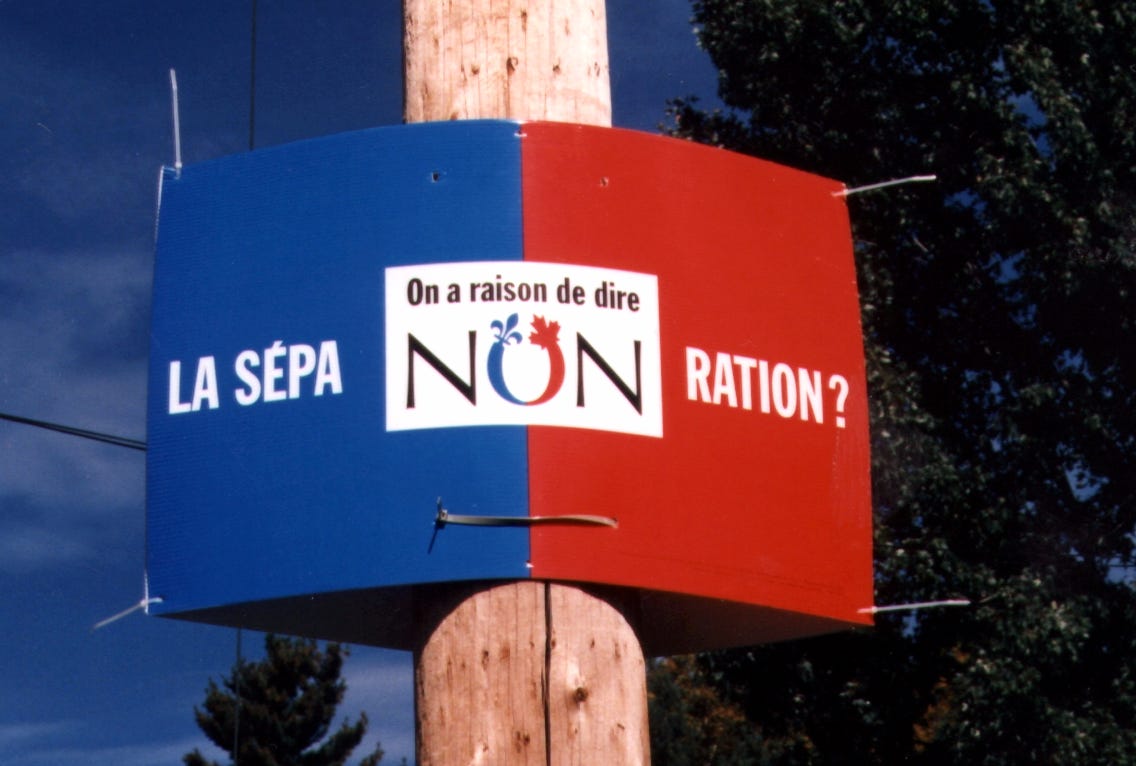
On CBC’s Front Burner programme, host Jayme Poisson and guest Chantal Hébert reflected upon Quebec’s 1995 independence referendum, the complex negotiations a ‘yes’ vote would have triggered between Quebec, Canada’s federal government, and the other provinces, and its potential lessons for present-day Albertan separatists.
Miranda Melcher interviewed Robert Suits on the New Books Network about his book The Hobo: A History of America’s First Climate Migrants, the environmental and economic conditions that produced a class of young male itinerant labourers in the late 19th and early 20th-century US, and the jobs and practices that sustained them.
If you’ve enjoyed this post, please consider supporting my work by becoming a free or a paid subscriber to the newsletter. Paid subscribers are vital to me being able to continue producing and expanding this newsletter.
You can also support my work by making a one-off payment, at a price you consider affordable.
Otherwise, please show your appreciation by sharing this post more widely, and referring the newsletter to friends.
You might also enjoy these posts from the Academic Bubble archive:
Service Games

Reading footballers’ autobiographies from between the 1940s and 1960s, and their accounts of national service, offers a useful insight into the hard practicalities underpinning national identities.
Passport to Pimlico (1949)

Passport to Pimlico is often seen retrospectively as whimsical, but drafts of earlier versions of the film demonstrate a more sharply political edge.
Foot and Mouth – The Killing Fields in Wales (2021)

This documentary revisited the 2001 foot-and-mouth outbreak and ensuing animal cull in Wales, and its impact on the country’s farmers, in part through the prism of the recent COVID pandemic.