
Stop, Look, and Listen #57
A round-up of what I have been reading and listening to this past week.

Please support my work by becoming a free or a paid subscriber to the newsletter. Paid subscribers are vital to me being able to continue producing and expanding this newsletter.
You can also support my work by making a one-off payment, at a price you consider affordable.
This post is part of the newsletter’s ‘Stop, Look, and Listen’ series, a digest of articles and podcasts that I’ve found engaging and insightful over the past week.
Content warning: Anti-Black racism.
Five things to look at
In this post for Just Security, Lesia Bidochko outlined how Ukraine became a leader in military drone production through an ecosystem of small producers competing for government contracts and learning rapidly from battlefield developments, providing the bedrock of its resistance against Russia and attracting demand from other states.
Steve Kennedy drew on examples from Poland, South Korea, Brazil, and Pakistan, in this article for Liberal Currents, to illustrate the combination of electoral, legal, and pluralistic grassroots campaigns necessary to resist illiberal institutional capture, and the need for liberal democracy’s advocates to build global networks to sustain it.
Eric Schliesser wrote for his DigressionsImpressions newsletter about Thomas Hobbes’ conception of principles of reason as universally applicable but not universally familiar, arguing Hobbes held that those principles could nonetheless be discovered anywhere providing the rule of law existed to facilitate ‘industrious meditation’.
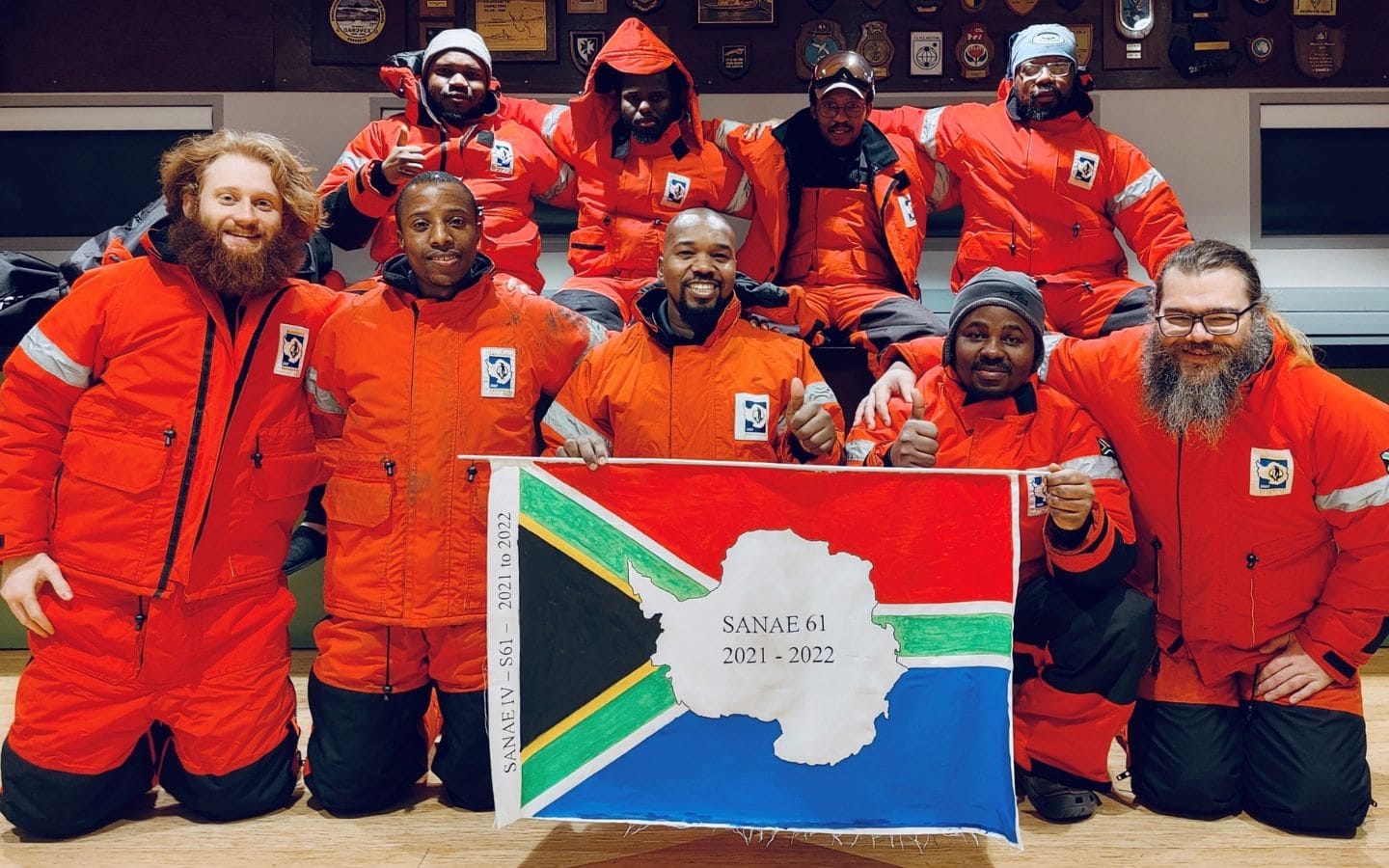
For African Arguments, Andrew Zerzan reflected on African multilateral initiatives’ frequent failure to turn lofty principles into practical action, suggesting the continent’s states could learn from multilateral cooperation in Antarctica, including the need for deliberate interdependence, a narrow technical focus, and transparency.
Sneha Krishnan wrote for History Workshop on the Women’s Christian College in early 20th-century Madras, and how the liberal imperialist logic of its archives elide Indian Christian women’s pursuit of internationalism in resistance to colonialism and nationalism, through even to the collections’ present location in Britain and the US.
Five things to listen to
Miranda Melcher interviewed David Petruccelli on the New Books Network about his book A Scourge of Humanity: The Origins of Interpol and the End of Empire in Central and Eastern Europe, and the way post-First World War police forces prosecution of international crime contributed to the erosion of liberal freedoms in the region.
Hosts Jonathan Wilson and Rob Draper talked about Brazilian World Cup history with guest Tim Vickery, on the It Was What It Was podcast, and how in contrast to myths about their free-flowing style of play, the team’s approach was shaped by an often technocratic nation-building project, and reaction to past traumas and glories.
On the Who Makes Sense? podcast, hosts Jessica Ann Levy and Dylan Gottlieb discussed the rise of the ‘Yuppie’ in 1980s New York, as financialisaton created an apparently meritocratic but often exploitative employment market for upwardly mobile young professionals in the city, fuelling inequality and cultural change.
Alycia Acai welcomed Gautham Rao onto the Civics & Coffee podcast for a conversation about how 19th-century US policing developed through the creation of legal obligations for white Americans to engage in harassment of enslaved and free Black people, in ways that often exposed tensions in whiteness, such as around class.
On CBC’s Front Burner programme, Luke Thomas joined host Jayme Poisson to explain the history of and mythmaking around Donald Trump’s relationship with the Ultimate Fighting Championship, what both sides gain from the association, and why UFC and combat sports more generally are so fertile for right-wing exploitation.
If you’ve enjoyed this post, please consider supporting my work by becoming a free or a paid subscriber to the newsletter. Paid subscribers are vital to me being able to continue producing and expanding this newsletter.
You can also support my work by making a one-off payment, at a price you consider affordable.
Otherwise, please show your appreciation by sharing this post more widely, and referring the newsletter to friends.
You might also enjoy these posts from the Academic Bubble archive:
The Sun Shines Bright (1953)

John Ford’s second Judge Priest film ruminates on the racial and gender order of postbellum Kentucky, and the place of law and justice within it.
The Apprentice

The depicted relationship between Roy Cohn and Donald Trump links law, real estate, and politics, as well as establishing a lineage of the American right running from the 1950s to the present day.
The Secret Agent

This political thriller draws upon motifs of carnival and film genre to evoke the paranoia, lawlessness, and inequality of 1970s Brazil.