The Sun Shines Bright (1953)
John Ford’s second Judge Priest film ruminates on the racial and gender order of postbellum Kentucky, and the place of law and justice within it.

Please support my work by becoming a free or a paid subscriber to the newsletter. Paid subscribers can access my full archive of posts at any time, and are vital to me being able to continue producing and expanding this newsletter.
This post is part of the ‘Rewound’ series of analyses of objects or episodes from cultural and political history.
Content warning: Racism; Rape; Lynching.
Spoiler alert: This analysis of the film The Sun Shines Bright and its themes reveals plot details for the purpose of enhancing that analysis.
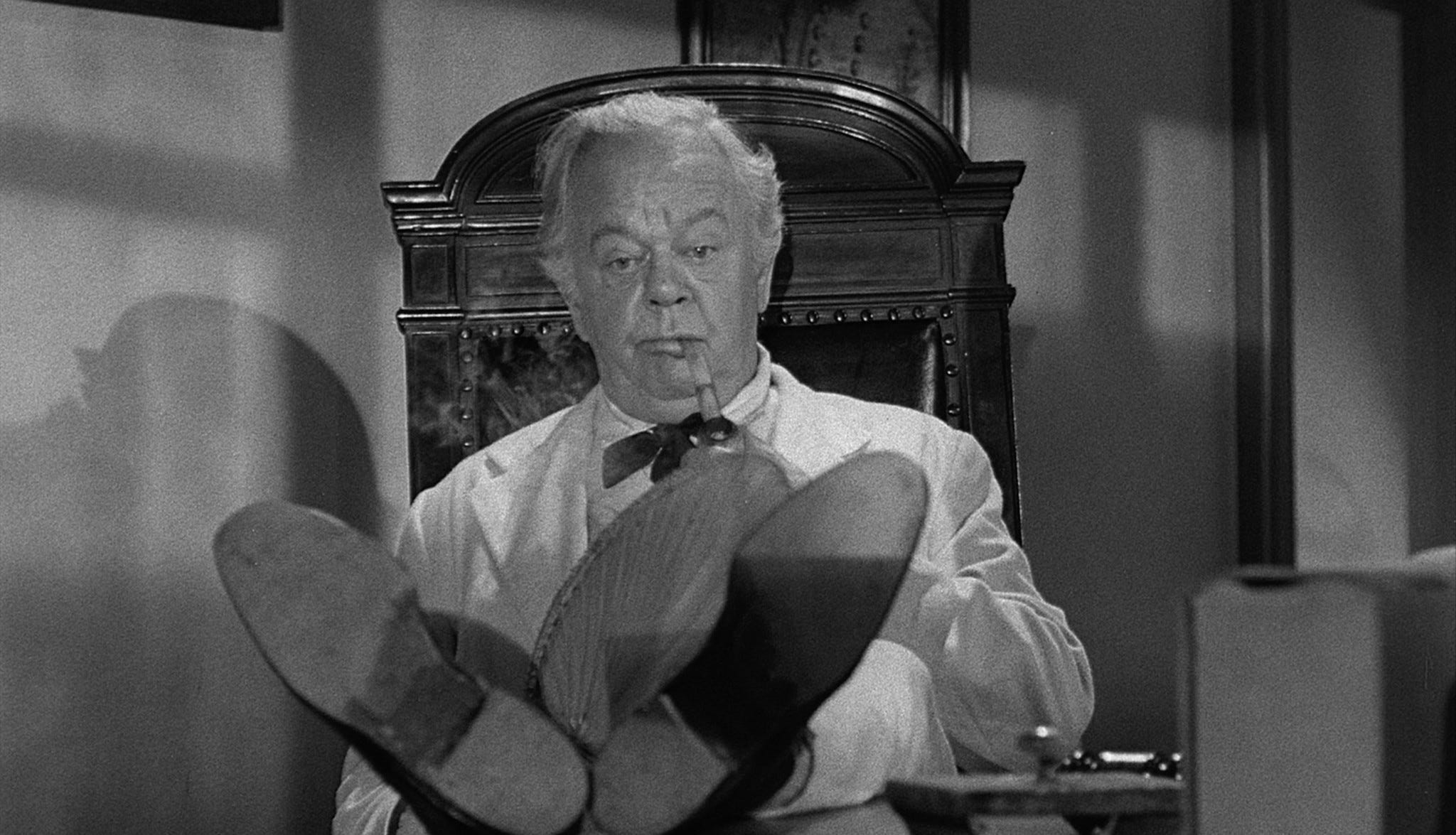
Set in late-nineteenth century Kentucky, The Sun Shines Bright focuses on the escapades of Billy Priest (Charles Winninger), the presiding judge in Fairfield County. A somewhat shambolic figure, Priest spends much of his time in the company of his Black servant Jeff Poindexter (Stepin Fetchit), who is equally hapless, and of his former comrades with whom he fought on the Confederate side in the Civil War, including Dr Lewt Lake (Russell Simpson), German-born department store owner Herman Felsburg (Ludwig Stössel), Sheriff Andy Redcliffe (Mitchell Lewis), dogcatcher Jimmy Bagby (Paul Hurst), and backwoodsman Feeney (Francis Ford). Priest is standing for re-election as judge against pompous prosecutor Horace K. Maydew (Milburn Stone), but two interlinked scandals threaten to derail his campaign.
The first of these concerns Dr Lake’s adoptive daughter, schoolteacher Lucy Lee (Arleen Whelan). Lucy’s real parentage is the town’s open secret – her father was the deceased son of Confederate General Fairfield, and her mother a prostitute – but the General (James Kirkwood) refuses to acknowledge her, despite Judge Priest’s pleading. Lucy’s would-be suitor, wayward returnee Ashby Corwin (John Russell), challenges stablemaster Buck Ramsey (Grant Withers) to a bullwhip fight for consistently making innuendo about Lucy’s heritage; the fight is broken up by the Judge, who sends Ramsey away to his home in the neighbouring Tornado District, before confirming to Ashby that the rumours about Lucy are true and that he risks further humiliating her through his actions.
Shortly afterwards, a sick woman (Dorothy Jordan) arrives back at the town and collapses, with Ashby coming to her aid and bringing her to Dr Lake. The woman, it turns out, is Lucy’s mother, who is dying; after setting eyes on Lucy, she is content and asks to be taken back to the house of her former employer, brothel madam Mallie Cramp (Eve March). Mallie herself then seeks out Judge Priest to ask for his help in arranging the funeral. The Judge agrees, despite knowing that his association with the affair will damage his reputation ahead of the election. Lucy realises that the dying woman is her mother.
The second scandal arises when the Judge hears a case involving an elderly Black man, Pleasant Woodford (Ernest Whitman), and his banjo-playing nephew U.S. Grant Woodford (Elzie Emanuel), who is failing to support him. Recognising ‘Uncle Plez’ as the man who carried home the body of Ashby’s father Bainbridge from the Battle of Chickamauga, Judge Priest helps out by instructing U.S. to head to the Tornado District, where he can find work curing tobacco. However, U.S. is subsequently arrested while there for allegedly raping a white girl. Judge Priest severely doubts the veracity of the case against him but is determined he will face a fair trial. When a mob led by Buck Ramsey and the girl’s father, Rufe Ramseur (Trevor Bardette), turn up at the jailhouse determined to lynch U.S., the Judge calmly but bravely refuses to let them do so and persuades them to return home.
Subsequently, while the Judge and the others are attending a temperance dance, one of the Sheriff’s deputies arrives in a carriage with a handcuffed Buck Ramsey, who has been identified by the rape victim as her real attacker, alongside him. When Ramseur also shows up and attempts to shoot him, Ramsey escapes in the chaos by stealing Dr Lake’s carriage with Lucy inside it. However, Feeney shoots Ramsey dead, and Ashby rides in to rescue Lucy. Thereafter, the Judge and his friends participate in the funeral procession for Lucy’s mother, despite the mockery of some bystanders, with Judge Priest himself giving the eulogy. During the service, General Fairfield arrives and takes his seat alongside Lucy, signalling his acknowledgement of her at last as his granddaughter.
At the election, Mayhew holds a slender lead over Judge Priest in the vote count, but then the men of Tornado District turn up and, grateful to the Judge for having saved them from their own misguided anger, vote unanimously for him. With the votes now absolutely level, the Judge posts the deciding ballot for himself, securing re-election. The film concludes with a military procession marching past the Judge’s house playing ‘Dixie’, before Uncle Plez and U.S. lead a rendition by the town’s Black inhabitants of ‘My Old Kentucky Home’ in his honour, moving the Judge to tears.
Race and the social order
The Sun Shines Bright was John Ford’s second adaptation of the Judge Priest stories written by the Kentuckian author and columnist Irvin S. Cobb, following nearly two decades after 1934’s Judge Priest. The society in which The Sun Shines Bright is set exists specifically in relation to the memory of the Civil War. Priest and his comrades’ status as veterans is integral to their continuing group identity, humorously but affectionately encapsulated in the way Priest’s friends flock to the courthouse when they hear US playing ‘Dixie’, or their continued uniformed reunions.
It emerges at one of these reunions that the United States flag that they are flying alongside the Confederate one was captured from a local meeting of Union veterans, but the incident produces no rancour: their leader, Jody Habersham (Henry O’Neill), arrives and politely explains that their own meeting cannot begin without a flag and asks if he can borrow theirs, and Judge Priest gladly volunteers to act as a colour guard and accompany Habersham to the meeting with the flag. A great show is made of the harmony that exists within the community between the two sides now, the source of the conflict entirely untouched upon, even as Fairfield’s associational culture remains organised around having fought in it, and upon which side.
This is also a society clearly organised around race. Black residents of Fairfield occupy subordinate and submissive roles. Judge Priest regularly chastises Jeff for his ineffectiveness and routinely addresses him and other Black men with the infantilising ‘Boy’. Ford’s decision to recast Stepin Fetchit as Jeff, the role he had also played in Judge Priest was a controversial one, given the actor’s association with outdated representations of Black fecklessness for white people’s amusement.1 There is certainly a strong element of he and other Black characters being deployed for comic relief here.
However, The Sun Shines Bright also routinely depicts interracial relations as affectionate and organic. The labour Black residents of Fairfield provide, particularly that of performing music, functions as a kind of spiritual balm for the white society they serve. It is strongly implied, for example, that Pleasant Woodford would have originally been a house slave of the Corwins, whom he is still a servant to. Yet there is also a moral and familial element to the work he performs for them, from personally bearing Bainbridge’s corpse ‘with these two arms’, to chastising Ashby for appearing drunk in public; he is ‘Uncle Plez’ not only to his nephew, U.S., but to the whole town.
Gender and the social order
Fairfield’s is a gendered, and classed, as well as racial order. This is rooted in part in the martial identities dating back to the war, which binds Judge Priest and his friends together as men. It also centres on the preservation of white women’s honour and purity, and the organisation of heterosociality around ritual encounters such as the temperance dance. Yet the film is utterly committed to sending up this faux-gentility, such as in the way the dance’s host Aurora Ratchitt (Jane Darwell) tells a succession of debutantes ‘you’re the prettiest girl at the party’, or the Judge and his friends’ mock horror at having to drink lemonade rather than alcoholic beverages.
The tensions in this order are epitomised by Lucy Lee, for whom Dr Lake and his friends serve as a surrogate, paternalistic family to. Yet they do so because of the scandalous circumstances of her conception that left her an orphan. She also symbolises female professional empowerment in her role as a schoolteacher, but the all-Black makeup of her wards and their intense familiarity with her – though only depicted fleetingly – and her evident discomfort at the temperance dance serve to reinforce the tenuousness of her position. Paradoxically, it is this perennial challenge to her respectability that compels Ashby to step us as a man, from his brawl with Buck Ramsey to his escorting her to the ball.
The film is especially critical of the ostracisation faced by another type of working woman. Association with a brothel madam like Mallie Cramp, or a prostitute such as Lucy Lee’s mother, is potentially ruinous for professional men like Judge Priest and Dr Lake, yet their sense of duty to their professions overrides any calculation of the consequences. The appearance of Mallie and her staff in fine funereal attire upon a carriage with the coffin, and their receipt of the scorn of some passers-by, likewise demonstrate both the affluence that sex work brings to her and the impossibility of buying a social status equivalent to it. The connection between race and gender in this social structure (and the film’s sympathy with the lower orders within it) is typified by the funeral itself taking place in a Black church, with its congregants providing hymnal accompaniment.
The danger inherent in this state of affairs is best encapsulated by the episode with U.S. and the lynch mob. It is the patriarchal urge to protect white female purity from violation by Black male sexuality that compels the men of Tornado District to follow a course of action they must be dissuaded from for both US’s and their own good. The fact the mob is led by Buck Ramsey, who we have already seen impugn the reputation of another young white woman, Lucy Lee, is a clear caveat to the genuineness and advisability of this course of action. And so it subsequently turns out that Ramsey had whipped up racial hatred to conceal his own guilt for the crime. When Rufe Ramseur turns up at the temperance dance with just his son and wronged daughter to try and avenge the crime by identifying and shooting Ramsey, the film tacitly condones this apparently more legitimate patriarchal impulse.
Judge Priest’s jurisprudence
I want to conclude this piece with some reflections on the figure of Judge Priest himself, since it is my interest in American cultural representations of judges and jurisprudence that drew The Sun Shines Bright to my interest.
The first thing to say about him is he above all a comic figure, played broadly by Charles Winninger in the main. He is also nakedly political, the re-election campaign being an integral sublot to the film, and is forever in electioneering mode, always taking opportunities to distribute cards reminding people to vote for him. Yet the farcical nature of his conduct dispels any hint of genuine corruption: the insincerity of his insincerity being the mark of his actual sincerity. He is also deeply humane and pragmatic, and willing to take risks with his reputation and career to help the neediest. He is nostalgic about old Kentucky and the Civil War, and sentimental about the society he serves, in all of its parts.
This places him in marked contrast with his electoral opponent, Horace K. Maydew; the rivalry and close contest between the two men standing in for the broader political divisions that have shaped America’s recent past and will also determine his future. Judge Priest is a Democrat, obliged to pursue the votes of those whose allegiances and inclinations are anathema to his own, from Unionist veterans to teetotallers. Mayhew, whom he derisively describes as a ‘Carpetbagger’, seems to stand for the unstoppable force of apparent progress, convinced of the inevitability of his victory. Yet his prurience and his commitment to rationality and reform are accompanied by a disdain for the people the Judge is kindliest to.
This is illustrated in the courthouse scene, in which the Judge routinely cuts an absurd figure. He arrives late with Jeff, the two men blaming each other for their tardiness, and then reminisces with Pleasant Woodford about the Civil War before inviting U.S. to play a tune on his banjo, and finally hands U.S. some of his campaign cards to distribute in the Tornado District – a sequence of actions that attract Maydew’s mockery and scorn in turn. Nonetheless, he helps resolve in practical fashion the situation facing Pleasant and his nephew, where the overly litigious Maydew had sought a punitive legal solution.
Judge Priest’s approach to justice is also borne out in the scenes relating to the rape of Rufe Ramseur’s daughter. When U.S. is arrested, the Judge assures him, ‘Boy, you’ll have a fair trial. Race, creed, or color; justice will be done in my courtroom.’ Yet this is not really an evocation of principles of impartiality and due process. He subsequently tells Andy Radcliffe, ‘Get your men together, go out there and find the right man…and stop chasing children around.’ He is convinced of U.S.’s innocence, which is connected to his seeing him as childlike, which is connected to his race – the very thing that had made him guilty in the eyes of the lynch mob.
It is this belief that U.S. has committed no crime, his imperative to protect the most vulnerable, and his personal and professional bravery, rather than a commitment to the rule of law in an abstract sense, that motivates the Judge to take his one-man stand in front of the jailhouse. Likewise, the film rejects mob justice for the prejudices that drive it, the deleterious effects it has on the reasoning of those who participate in it, and the visible terror it causes among the Black people whom are its likely targets, rather than for breaching formal rules about who delivers justice, and how. When Buck Ramsey is identified as the real culprit, not only is Judge Priest’s instinct vindicated, but also Ramsey’s impending extra-judicial execution, the Judge subsequently remarking to Feeney, ‘Good shooting, comrade…saves a trial.’
The theological underpinnings of this jurisprudence, hinted at by the very name ‘Judge Priest’, are fully realised in the funeral scene. An event commemorating the life and marking the death of a woman marginalised for the line of work she fell into, held in a space of worship normally occupied for those marginalised for their race. This double lowliness is nonetheless set into relief by the Judge’s eulogy, in which he quotes from the Gospel of John, and the story of the woman taken in adultery, whom the law of Moses would have condemned to death, but of whom Jesus replied ‘Let anyone among you who is without sin be the first to throw a stone at her.’
It is not for the Judge, nor indeed anyone in this film, to enduringly transform the social hierarchy that exists in Fairfield. Rather, it is to preside over these inversionary rituals, whether in court or in church, in which all are temporarily equal before judgement, and to offer kindness, protection, and mercy to the most vulnerable, miserable, and reviled.
If you’ve enjoyed this post, you can show your appreciation by sharing it more widely, recommending the newsletter to a friend, and if you’d like, by buying me a coffee.
Tag Gallagher, John Ford: The Man and His Movies (Berkeley, CA: University of California Press, 1986), pp. 66–67.

