
Troublesome Engines (1950)
The Rev. W. Awdry’s Troublesome Engines centred on a Christianised notion of moral economy, in which industrial action was pitted against unitary righteous authority.


Please support my work by becoming a free or a paid subscriber to the newsletter. Paid subscribers can access my full archive of posts at any time, and are vital to me being able to continue producing and expanding this newsletter.
This post is part of the ‘Rewound’ series of analyses of objects or episodes from cultural and political history.
This is the first in what will be an occasional miniseries of posts on The Railway Series: the original 26 books written by the Revered Wilbert Vere Awdry and published between 1945 and 1972. These later became the source material for the lucrative Thomas the Tank Engine & Friends franchise (named after the most popular of Awdry’s engines), starting with Britt Allcroft’s adaptation of the books for television from 1984.
Yet my interest here is in the fictional universe the Reverend Awdry created in the first instance, which eventually evolved, as the series progressed, into the interconnected rail networks of the invented Island of Sodor. How did his theological beliefs, as an Anglican clergyman, infuse this world of living, talking engines, in its moral foundations and political implications? How did he, as a railway enthusiast, imagine the operation of the industry in these books, in response to real-life organisational and technological changes such as nationalisation and dieselisation? Where do the books fit in within the wider culture of post-war Britain?
It’s a fictional universe that is incredibly familiar to me. As far back as I can remember, there was Thomas, firstly the programme (specifically the original two series, narrated by Ringo Starr), and as I learned to read, Awdry’s books (and the subsequent additions to the series written by his son Christopher from 1983 onwards). It’s a comforting world virtually inseparable from my embryonic childhood one. It’s also a world, etched in detail in my memory as it is, that I’ve always been eager to reflect and write critically on, as a scholar of the intersection between popular culture and political ideology.
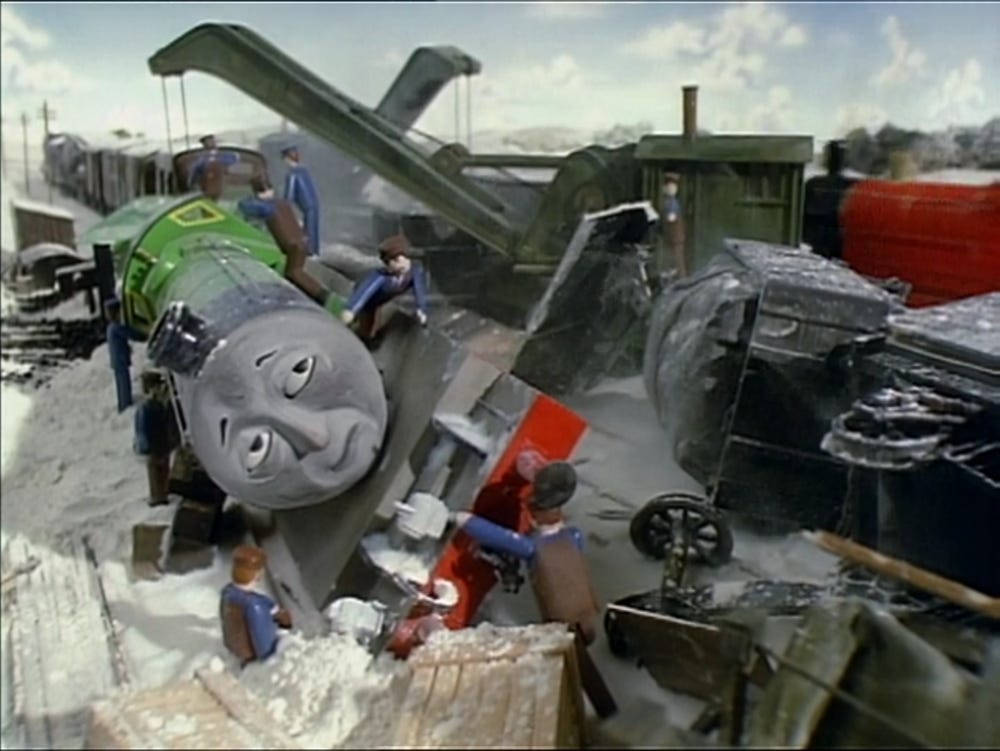
So we begin this miniseries with the book that perhaps remained with me the most, and in one way the most explicitly political: Troublesome Engines.
Troublesome Engines
Troublesome Engines was published in 1950. It was the fifth book in the series that had been published by Leicester-based Edmund Ward since 1945, with increasing commercial success. In line with its predecessors, it contained four stories (illustrated by C. Reginald Dalby) that followed an overarching narrative arc.
It centred on the principal cast of characters introduced in the previous four books: cheeky but maturing Thomas (hitherto the only tank engine) and his coaches, Annie and Clarabel; kindly Edward; self-pitying Henry; boastful Gordon; vain James; and the railway’s strict but benevolent ‘Fat Controller’. It also introduced another, enthusiastic new tank engine, Percy.
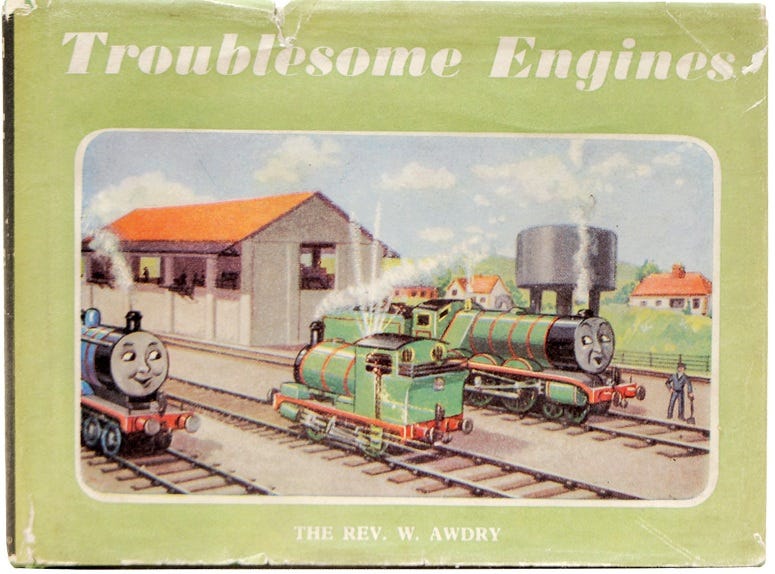
The book began with an explanatory foreword by Awdry:
Dear Friends,
News from the Main Line has not been good. The Fat Controller has been having trouble. A short while ago, he gave Henry a coat of green paint, but as soon as he got his old colour back again, Henry became conceited. Gordon and James, too, have been getting above themselves.
I am glad to say, however, that the Fat Controller has, quite kindly but very firmly, put them in their place. And now the trains are running as usual.
I hope you will like meeting Percy. We shall be hearing more of him later.1
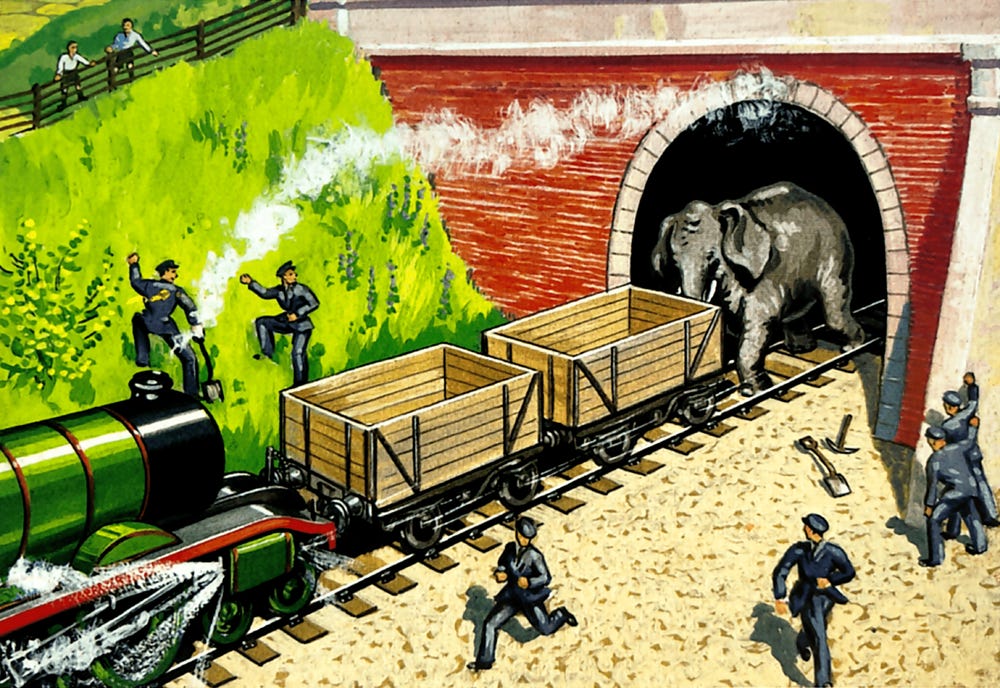
The first story in Troublesome Engines is ‘Henry and the Elephant’. In the wake of Thomas having left the Main Line to work on his own branch line, the additional work leads to Henry, Gordon, and James becoming disgruntled. Temporary distraction from their troubles comes with the arrival of a circus in the town. Yet thereafter, when Henry pulls a train to deal with a blockage in a tunnel, it turns out that the blockage is an elephant, which splashes him with water.
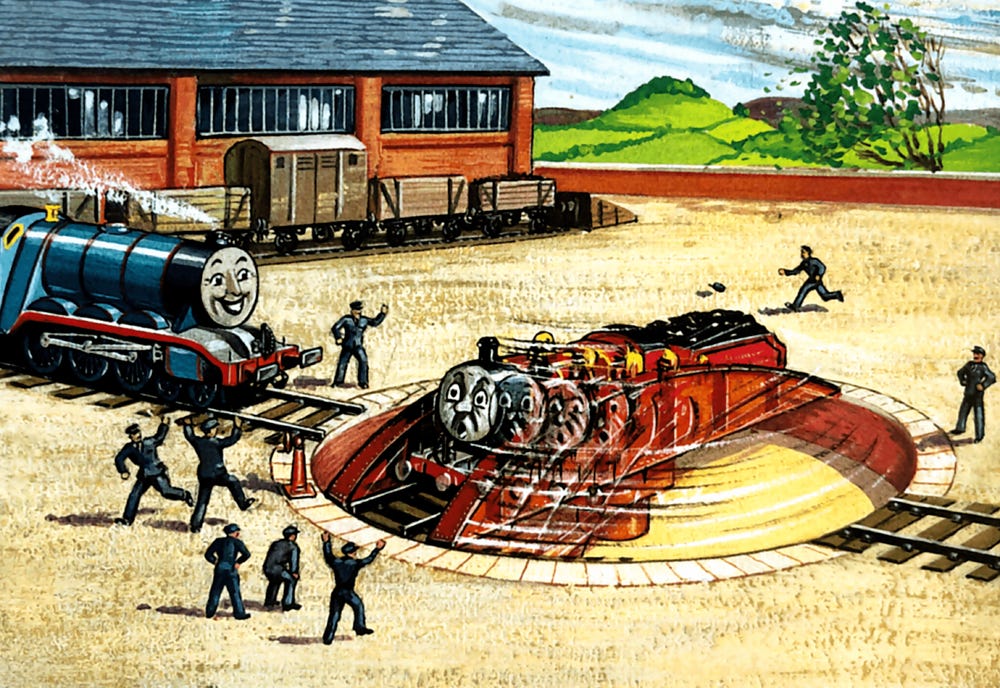
In the second story, ‘Tenders and Turntables’, it is the turn of Gordon and James to endure embarrassment. Firstly, after Gordon stubbornly makes it impossible to turn him around on a turntable, he is forced to pull a train backwards, and is mistaken for a tank engine. Then the much lighter James is spun around uncontrollably by the wind on the same turntable. They and Henry end the story determined to avenge their humiliations.
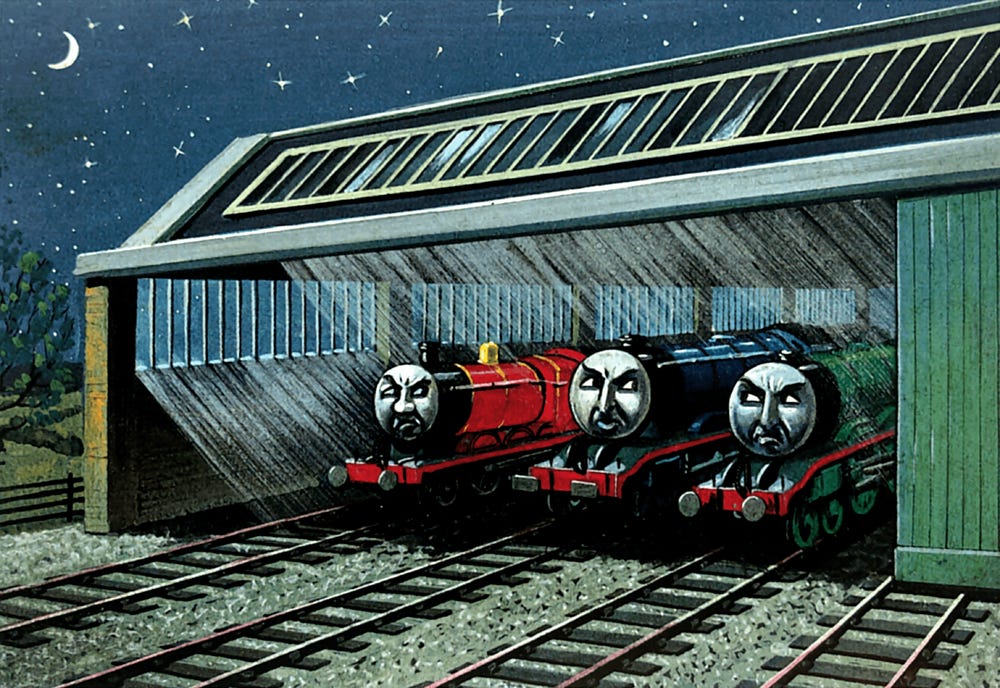
They subsequently go on strike in the third story, ‘Trouble in the Shed’, refusing to shunt their own coaches. The Fat Controller asks Edward to fetch the coaches for them so that their trains can run, but they ostracise him for shunting when he is a tender engine. The Fat Controller decides he needs to buy another tank engine, and at the engine workshop is impressed by Percy, who he brings back to work on the railway. Percy makes an immediately positive impact, and the Fat Controller decides to teach Henry, Gordon, and James a lesson by shutting them up in the shed, bringing Thomas back to help Edward run all the Main Line trains, while Percy helped run Thomas’s branch line.
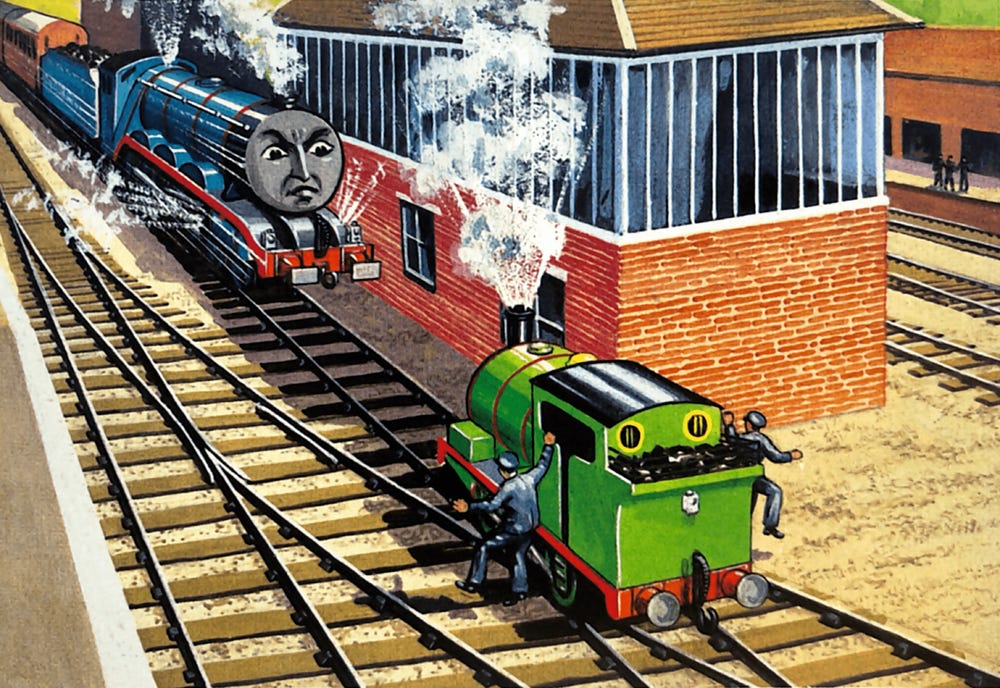
The fourth story, ‘Percy runs away’, concludes this narrative arc. Henry, Gordon, and James, suitably chastened, are let back out of the shed to operate the main line as normal. Percy is cheeky towards them, but forgetting Edward’s advice to whistle to let the signalman know he is there, suddenly finds Gordon rushing directly towards him with the Express. Gordon stops in time and avoids a collision, but Percy – his driver and fireman having leapt from his footplate – speeds away backwards along the line and cannot stop until he is directed into a siding with a sandbank. Gordon arrives and the two reconcile. The story, and book, concludes by informing the reader that Percy remains cheeky but has learned to be more cautious.
Awdry wrote Troublesome Engines while working as Rector in the Cambridgeshire parish of Elsworth, a position he had occupied since 1946. He had by this time developed a working system for producing the Railway Series books at a rate of roughly one per year while also fulfilling the duties of his day job. He wove novelty into the familiar format by drawing upon real-life stories from railways: ‘Henry and the Elephant’, for example, was based on real story he heard from a former worker on the Indian railways.2
The theme of a strike, meanwhile, likely drew upon the recent instances of industrial unrest, including unofficial stoppages, on the nationalised British Railways, due to rail workers’ dissatisfaction with having to lodge away from home on longer journeys, and over pay.3
A hierarchy of engines
Leaving aside momentarily the issue of their relationships with humans, there was considerable evidence of nascent hierarchy in the Rev. Awdry’s anthropomorphising of engines, rolling stock, and other vehicles by the time of Troublesome Engines. All six of the engines introduced prior to or during this book were male, and indeed this would remain the case with all but two of the engines he created for the series.4
This gender imbalance was reinforced over the course of the series by Awdry’s habit of making all named coaches female, something he had already commenced by 1950 with Annie and Clarabel. Trucks, meanwhile, were characterised as uncouth and mischievous, having already caused a number of accidents or near-accidents in the preceding four books. So a dichotomy had already commenced between the male engines and rolling stock, and within the rolling stock, the latter who were either effectively work wives (coaches) or quasi-working class underlings (trucks).
It is in Troublesome Engines that we first see significant attention paid to a categoric distinction within the engines: that between tank and tender engines. The former were in real life (usually) capable of running equally well forwards or backwards; the latter could carry more fuel and therefore travel longer distances. A conceit of some of the tender engines introduced in this book was that possessing a tender made them superior.
“You don’t understand, little Thomas,” said Gordon, “we Tender Engines have a position to keep up. You haven’t a Tender and that makes a difference. It doesn’t matter where you go, but we are Important, and for the Fat Controller to make us shunt trucks, fetch coaches, and go on some of those dirty sidings it’s— it’s— well it’s not the Proper Thing.”5
One of the already established narrative logics in the Railway Series was that engines who develop an overinflated sense of their own importance, abilities, or expertise, routinely have their pretensions embarrassingly flattened, often with a heavy dose of irony. In this particular story, ‘Tenders and Turntables’, it is that both Gordon and James are subsequently humiliated through a turntable, a piece of machinery they have to use because they have tenders.
This then is one of the more egalitarian tendencies in the series: that size and status do not matter morally (even if they are structurally significant) and it is an error to assume otherwise. This is a metaphorical framework that can also be potentially projected onto understandings of the relationship between children and adults, or poor and rich, for example.
Work and reward
Hard work is perhaps the most celebrated quality in The Railway Series. It is one that could bring redemption, as in the first entry in the series, The Three Railway Engines, in which a previously disgraced Henry (who had been bricked up in a tunnel after refusing to come out due to the rain) regains the Fat Controller’s esteem by helping Edward pull the Express after Gordon’s safety valve bursts.
Equally, it could bring about something tantamount to career advancements or enhancements in workplace esteem. Edward and Henry both receive new coats of paint as rewards for their exploits in The Three Railway Engines; Thomas his own branch line for his in Thomas the Tank Engine; James the opportunity to pull the Express in James the Red Engine.
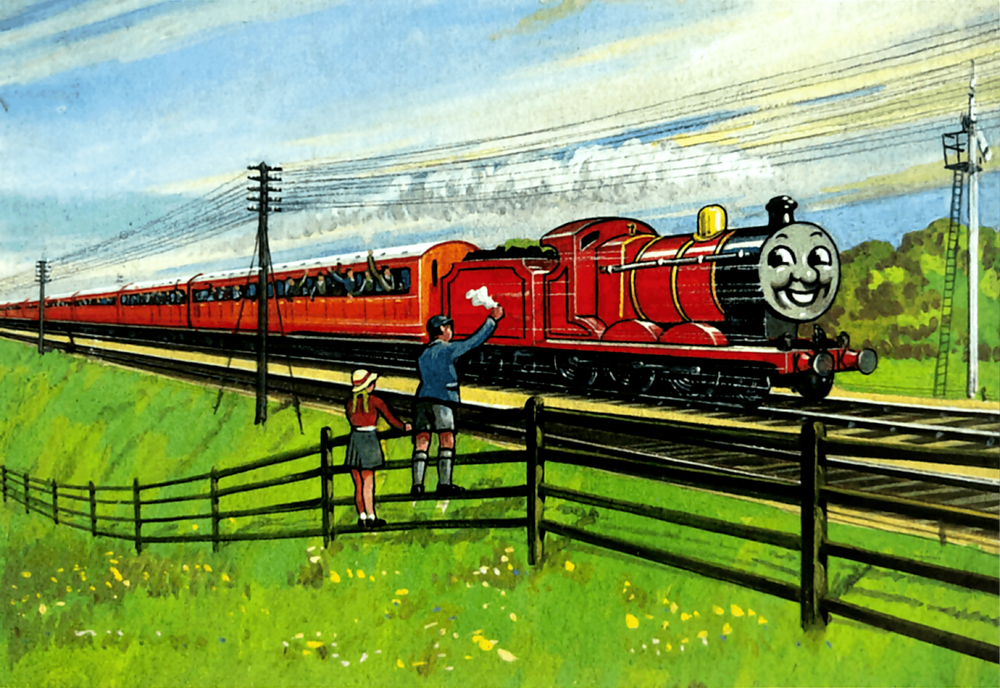
Human rail workers are present in the books: drivers; firemen; guards; stationmasters; signalmen; and others. They frequently function as extensions of the moral force provided by the Fat Controller, chastising or encouraging their engines as appropriate. Yet it is the work of the engines that the books focus on: it is the purpose of their existence; the importance of their doing so is explained entirely in terms of their utility to the railway; the individual awards accrued relate principally to their standing within that community.
Crucially, the engines themselves demonstrate agency in moving or not; they are not simply extensions of the will of the humans tasked with operating them, enabling though their work is. In ‘Tenders and Turntables’, Gordon’s truculence renders it impossible for the turntable to work: ‘His Driver tried to make him stop in the right place; backwards and forwards they went, but Gordon wasn’t trying.’6 In ‘Percy runs away’, Percy manages to start and run backwards without his driver, but having exhausted himself, could not then stop: ‘he had no driver to shut off steam, and apply the brakes.’7
This focus on engines over human staff displaces materialist conceptions of work and its reward in favour of theological understandings which see it as fulfilling a salvific or ontological role.8
Labour and its withdrawal
Work and status are inherently connected in The Railway Series, but with a disruptive potential arising from engines attaining too elevated an idea of their standing to heed advice or do the jobs asked of them. It is this that moves Henry, Gordon, and James to have an “indignation meeting” at the end of ‘Tenders and Turntables’, culminating in the work stoppage at the start of ‘Trouble in the Shed’.9
When the Fat Controller comes to the shed and tells a sulking Henry to get his train ready, Gordon retorts.
“We won’t shunt like Common Tender Engines. We are Important Tender Engines. You fetch our coaches and we will pull them. Tender Engines don’t shunt.”10
Thus industrial action is presented as illegitimate, the engines’ act of solidarity really lying in a misguided notion of superiority. Likewise, Awdry negatively and knowlingly portrays their shaming of Edward for carrying out work they have refused to do, a social and moral tool of compulsion regularly deployed in strikes:
“They all hiss me, Sir,” answered Edward sadly. “They say ‘Tender Engines don’t shunt’, and last night they said I had black wheels. I haven’t, have I, Sir?”11
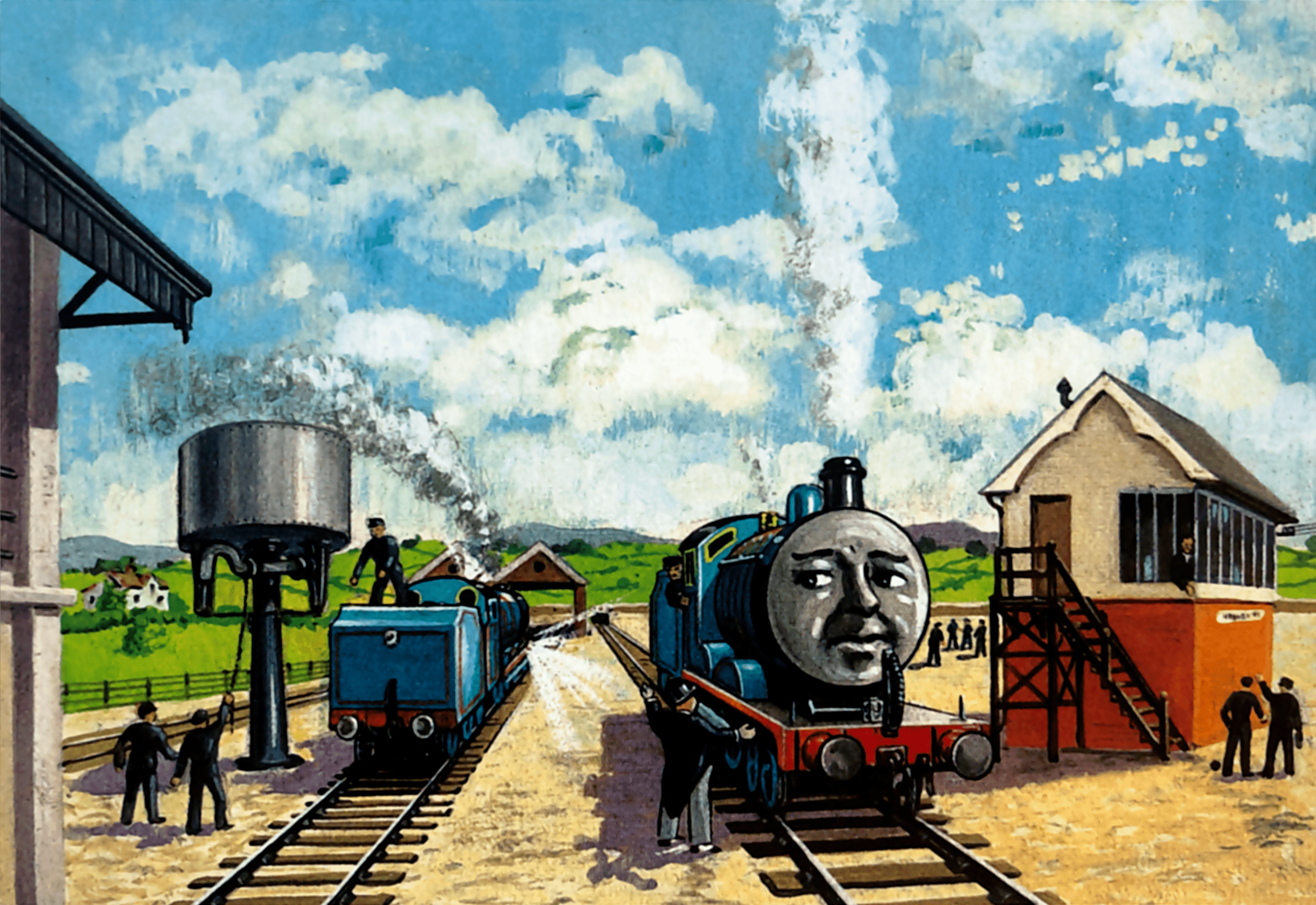
Percy, selected by the Fact Controller to work on the railway because of his enthusiastic promise to work hard, subsequently responds to Henry hissing Edward by letting off a loud “Whee — eesh!” that sends Henry running frightenedly back to his shed.12
The Fat Controller is sovereign
Contemporary Western ideas of sovereignty and good rule are deeply rooted in theology, with a particular lineage between unitarian notions of the nature of God and absolutist ideas about the need for all political power within a realm to be vested in one individual.13
This is a position the Fat Controller came to occupy in The Railway Series. As Brian Sibley, Awdry’s biographer, noted, while originally intended as a somewhat ridiculous figure, he increasingly came to possess such an omniscience and omnipotence in relation to the railway and its engines that Awdry regularly received correspondence asking if he was intended to represent God. This was an interpretation Awdry was happy to go along with if it provided child readers with ‘an idea of there being someone who is in control of the world.’14
The Fat Controller was originally called ‘The Fat Director’, before a change of status was announced in the foreword to the third book, James the Red Engine:
We are nationalised now, but the same engines still work the Region. I am glad, too, to tell you that the Fat Director, who understands our friends’ ways, is still in charge, but is now the Fat Controller.15
This continuity in essence from a privatised model of control means the Fat Controller’s sovereignty remains virtually unchallenged from above. It also allowed for a somewhat familial idea of the individual railway, which their owners had keenly promoted pre-nationalisation, to persist in the series.16
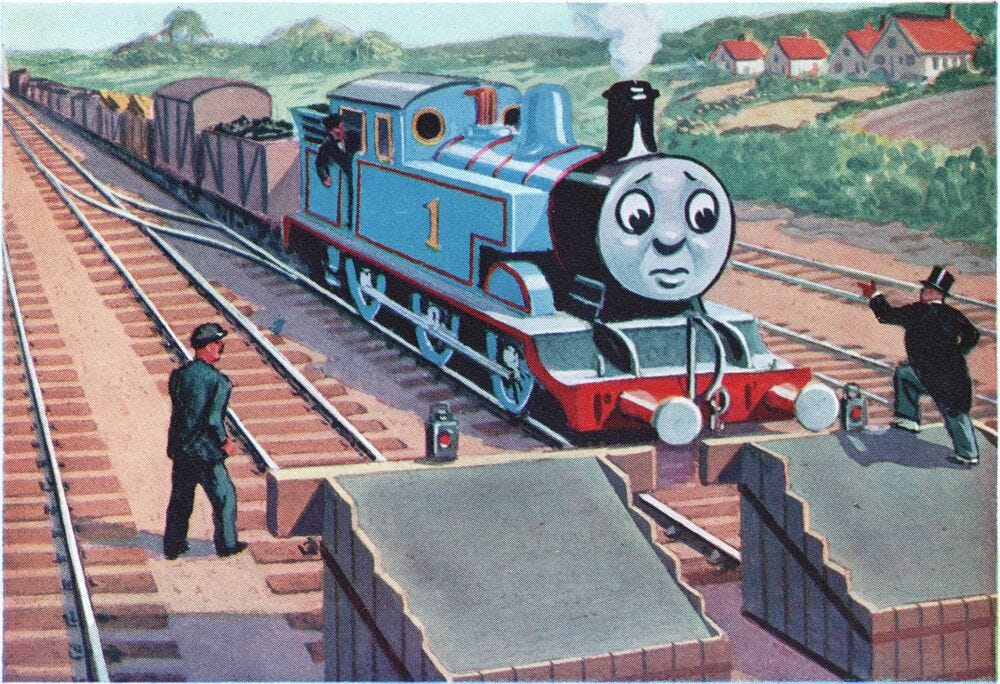
In Troublesome Engines, the Fat Controller is initially kindly and tolerant in handling Henry, Gordon, and James’ dissent over their increased workload after Thomas’s departure, giving the first two new coats of paint with a view to cheering them up. When the engines refuse to work in ‘Trouble in the Shed’, he issues a warning: “We’ll see about that; engine on My Railway do as they are told.”17 Nonetheless, he still seeks to ameliorate the situation, firstly by getting Edward to do the shunting the other engines will not, and then bringing in Percy to take over this work.
Yet once it becomes clear that he can take a more disciplinary course of action, he does so, summoning Thomas and telling he and Edward:
“Listen, Henry, Gordon and James are sulking; they say they won’t shunt like Common Tank Engines. So I have shut them up, and I want you both to run the line.”18
The story ends with the striking engines locked in the shed, ‘cold, lonely and miserable. They wished now they hadn’t been so silly.’19 The punishment persists for several days, until the Fat Controller reopens the shed at the start of ‘Percy runs away’:
“I hope you are sorry, he said sternly, “and understand that you are not so important after all. Thomas, Edward and Percy have worked the line very nicely. They need a change, and I will let you out if you promise to be good.”
“Yes Sir!” said the three engines, “we will.”
“That’s right, but please remember that this ‘no shunting’ nonsense must stop.”20
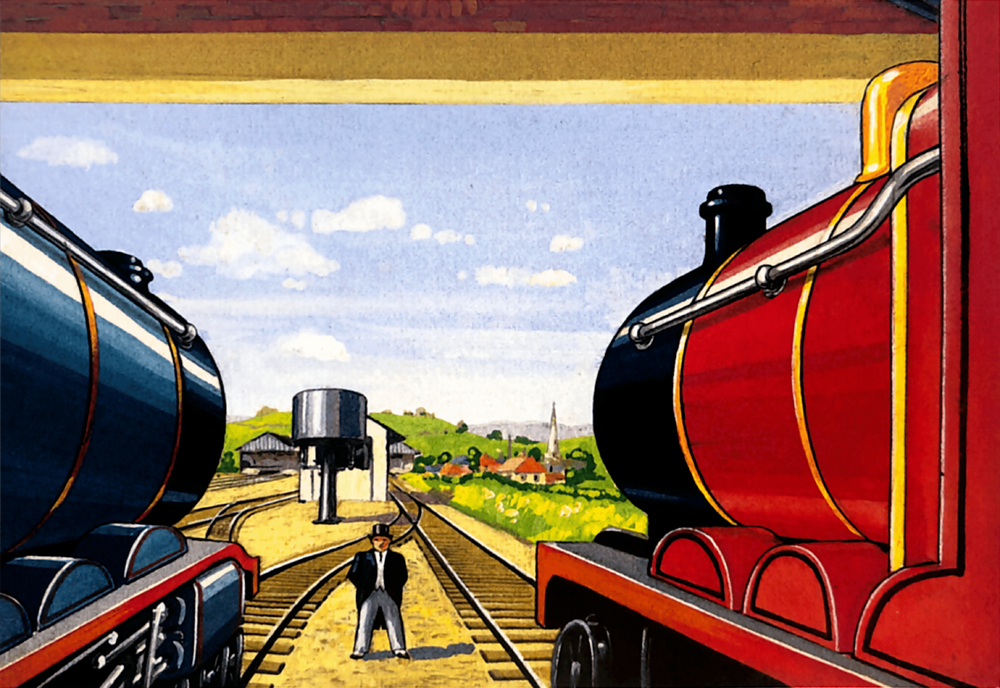
Thus, the absolute (but just) authority of the Fat Controller is wholly restored, and the status-driven industrial unrest equated with a childish spasm of disobedience. Awdry would himself re-emphasise this interpretation nearly half a century later, in conversation with Sibley:
‘Most steam engine drivers…have the feeling that a steam locomotive has a personality and can express it; hence it is possible to imagine a strike of energy and the Fat Controller dealing with it calmly but firmly as a nanny might deal with sulky children in the nursery!’21
We see in Troublesome Engines, then, an exultation of the uninhibited right to manage, which would become the guiding logic of the Thatcher government’s approach to nationalised, unionised industries in the 1980s. Its primacy in the book even surpasses the potential rival concerns of commercial performance and customer satisfaction. This is evident in one line from ‘Trouble in the Shed’: after the lock-in of the Henry, Gordon, and James, ‘There were fewer trains, but the Passengers didn’t mind; they knew the three other engines were having a Lesson.’22
A Christianised moral economy
What we have in The Railway Series, and in Troublesome Engines in particular, is a moral economy very different to that underpinning the unionised working class’s approach to industrial relations after 1945, as highlighted by Jim Phillips, based upon expectations of consultation and consent.23
Instead, it is one based upon individual endeavour, responsibility, and humility, and a necessary deference to unitary, paternalistic, godlike authority. It is that authority figure who, along with a broader providence, is responsible for furnishing primarily non-material reward in return for exhibiting those traits, rather than collective action in defiance of that figure, or indeed market forces as embodied by the passengers.
If you’ve enjoyed this post, you can show your appreciation by sharing it more widely, recommending the newsletter to a friend, and if you’d like, by buying me a coffee.
Rev. W. Awdry, Troublesome Engines (Leicester: Edmund Ward, 1950), p. 3.
For this portion of Awdry’s life, see Brian Sibley, The Thomas the Tank Engine Man: The Story of the Reverend W. Awdry and His Really Useful Engines (London: Heinemann, 1995), chs. 7 & 8.
On this episode in railway industrial relations, see David Howell, Respectable Radicals: Studies in the Politics of Railway Trade Unionism (Brookfield, VT.: Ashgate, 1999), part III.
The exceptions were diesel engines Daisy, introduced in Branch Line Engines (Leicester: Edmund Ward, 1961), and Mavis, introduced in Tramway Engines (London: Kaye & Ward, 1972), both of whom were characterised somewhat negatively.
Awdry, Troublesome Engines, p. 20.
Ibid., p. 24.
Ibid, p. 58.
See John Hughes, ‘Work and Labour’, in Nicholas Adams, George Pattison, and Graham Ward (eds.), The Oxford Handbook of Theology and Modern European Thought (Oxford: Oxford University Press, 2013), pp. 149–168.
Awdry, Troublesome Engines, p. 30.
Ibid., p. 34.
Ibid, p. 38.
Ibid, p. 42.
On the connection between religious and political ideas of leadership, see:
Luke Bretherton, ‘Sovereignty’, in Nicholas Adams, George Pattison, and Graham Ward (eds.), The Oxford Handbook of Theology and Modern European Thought (Oxford: Oxford University Press, 2013), pp. 255–276.
Peter J. Leithart, ‘Good Rule’, in Craig Hovey and Elizabeth Phillips (eds.), The Cambridge Companion to Christian Political Theology (Cambridge: Cambridge University Press, 2015), pp. 256–273.
Sibley, The Thomas the Tank Engine Man, pp. 106–107.
Rev W. Awdry, James the Red Engine (Leicester: Edmund Ward, 1948), p. 3.
On this concept and its dissemination, see Hannah Jane Reeves, ‘An Exploration of the ‘Railway Family’: 1900–1948’ (PhD Thesis, Keele University, 2018).
Awdry, Troublesome Engines, p. 34.
Ibid, p. 44.
Ibid, p. 46.
Ibid, p. 48.
Sibley, The Thomas the Tank Engine Man, p. 149.
Awdry, Troublesome Engines, p. 46.
See, for example, Jim Phillips, ‘Industrial Relations, Historical Contingencies and Political Economy: Britain in the 1960s and 1970s’, Labour History Review, Vol. 72, No. 3 (2007), pp. 215–233.