Post-Referendum Olympic Blues
Wildly contrasting narratives of what the London 2012 Olympics had meant neatly captured the divides between the British political left, right, and centre in the wake of the 2016 Referendum.

Please support my work by becoming a free or a paid subscriber to the newsletter. Paid subscribers can access my full archive of posts at any time, and are vital to me being able to continue producing and expanding this newsletter.
This post is part of the ‘Research and Reflections’ occasional series, consisting of pieces based on my ongoing academic research, as well as on my musings on and responses to current affairs and personal developments.
Writing in July 2019 for OnLondon – the website established by former Guardian commentator Dave Hill to cover the capital’s news, politics, and culture – freelance writer and local government consultant Richard Brown reflected on the fraught legacy of the ceremony that opened the city’s 2012 Olympic Games, in a Britain that had subsequently narrowly voted to leave the EU in 2016.
Seven years later, the lavish performance is still memorable, a very modern celebration of patriotism and pride, unity and diversity. But its meaning is now freighted with awareness of what followed, of the divisions that were triggered or laid bare by Brexit. We re-watch it through our fingers, like the opening scenes of a film where unsuspecting teens arrive for a party at a beautiful, isolated, cabin in the woods.
As Brown put it, the ceremony simultaneously resonated with different people ‘as a symbol of what we are losing, as a reminder of what we could be, or simply as a powerful piece of propaganda for a national unity that was always illusory’. This summary rather neatly captured the broadly tripartite composition of retrospective Olympic discourse in the late 2010s, albeit that occasionally exhibited greater nuance and ambiguity in the margins between the categories. There were those in liberal centre who looked nostalgically back on London 2012 as a high point of British multiculturalism, tolerance, and confidence. They saw this spirit as having been subsequently betrayed by an isolationist, divisive, dishonest, and xenophobic campaign to leave the EU.
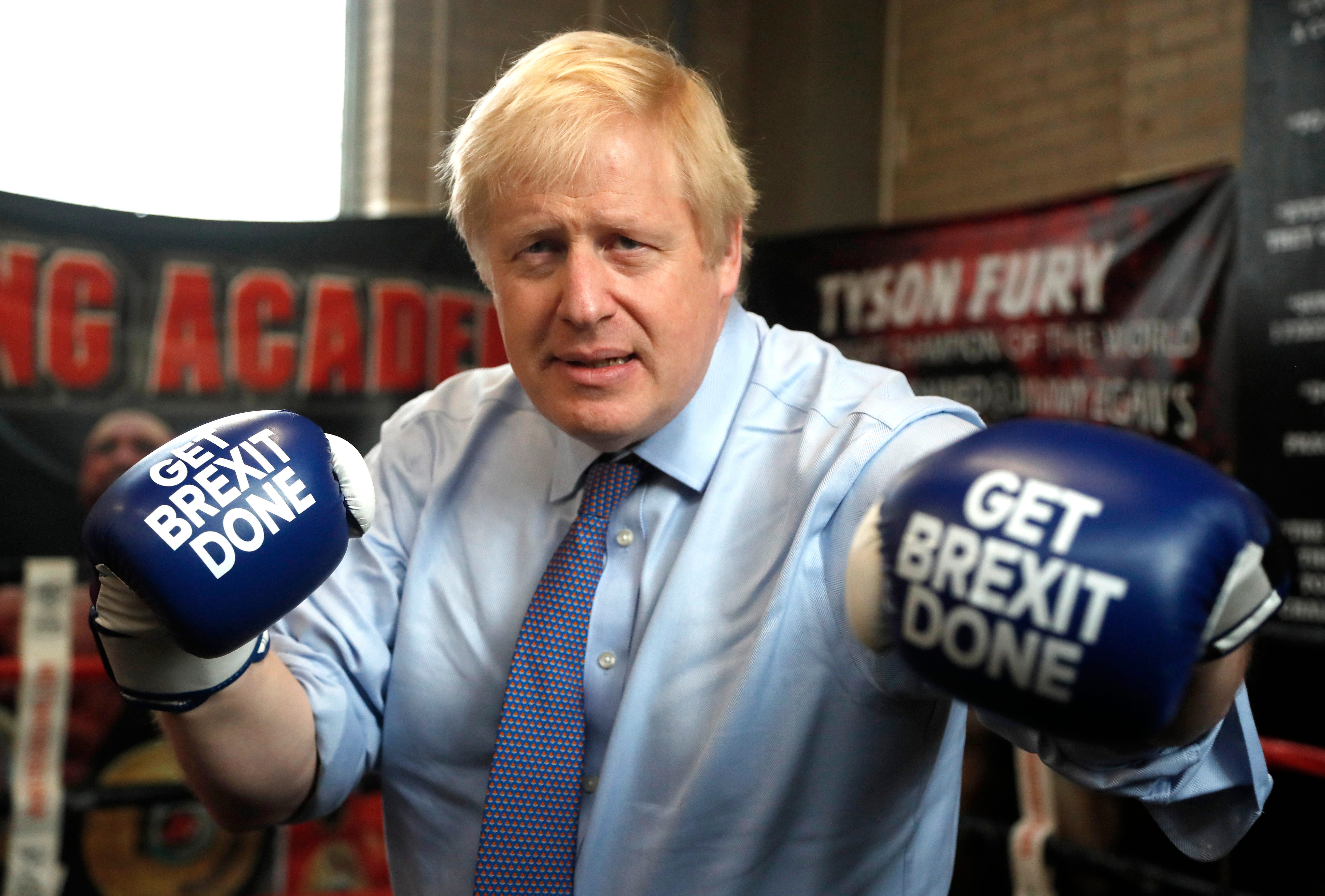
Then there were those on the right who harked back to the Olympics far less, but when they did tended to see Brexit as a continuation of that project. This was epitomised by the connecting figure of the maverick Conservative politician Boris Johnson, who as then Mayor of London had been a high profile, comical ambassador for the city during the 2012 Games, but after his subsequent return to Parliament in 2015 had backed leaving the EU. On the more radical wing of the left, meanwhile, Olympic nostalgia was an object of mockery: though generally not pro-Brexit, they were contemptuous of the idea that Britain had been a much better, more inclusive place in 2012, given the country’s long history of colonialism and racism, and the damaging programme of austerity that the Conservative-Liberal Democrat Coalition government had been implementing since coming to power in 2010.
This piece will explore how these arguments about the meanings of the 2012 Olympics unfolded in the interregnum between the 2016 referendum and Britain eventually leaving the EU at the start of 2020. The Conservatives under Theresa May fatefully underestimated the Labour opposition, under the left-wing leadership of Jeremy Corbyn, calling a general election in 2017 at which they lost their slim majority, leaving May’s minority government and badly divided party struggling to agree on acceptable terms of departure from the EU. Yet Labour were simultaneously also divided over both Corbyn’s leadership and whether to push for a softer departure or for a second referendum. The impasse finally ended with Johnson’s succession of May as Prime Minister in 2019, a subsequent landslide victory over Labour that brought an end to Corbyn’s leadership of the party, and ensured the necessary parliamentary majority to implement his own version of Brexit.
Liberal Olympic nostalgias
In July 2017, former Labour Party spin doctor and ardent Remainer Alistair Campbell wrote a piece entitled ‘How did Brexit Britain lose the spirit of the 2012 Olympics?’ for The New European, the pro-European newspaper founded in the wake of the Referendum result, and which had recently appointed him editor-at-large. Campbell began by reflecting longingly on the the London Games as ‘such a wonderful time to be alive, to be British’, emphasising the sense of optimism and positivity that had marked the occasion. He celebrated the role of New Labour in successfully bidding for the Olympics, but also the way its planning and delivery persisted successfully after the Coalition came to power in 2010, a ‘sense of unity’ typified by the continued role of former Labour Olympics minister Tessa Jowell in the project. Campbell also enthused about the regenerated environs of the Olympic Park, claiming he ‘struggled even to recall what had been there – or perhaps not been there might be more accurate’.
Campbell contrasted the ‘Soft Power’ of London 2012, the vision it had presented of ‘a country that was modern, vibrant, dynamic, outward-looking, multicultural, confident, welcoming, successful, united’, with the present moment, in which its global reputation was the very antithesis of these qualities. He placed the blame for this primarily at the feet of now Foreign Minister Boris Johnson, whose ‘unique mix of wit, bonhomie and manicured buffoonery’ had charmed so many during the Games. ‘The Olympics made Johnson the force that he became,’ Campbell lamented. ‘And it is in large part the force that he became that delivered Brexit.’ He counterposed Johnson’s Olympic legacy with those of Jowell and Sebastian Coe, the former middle-distance runner and Conservative MP who had chaired London 2012’s organising body: ‘Yours is to have helped take the Olympic spirit, the mood of London 2012, and create a Britain which represents the very opposite of all the good that they did.’
This article was a relatively early paradigm of the way the Olympics and Brexit would be set in opposition with each other in liberal discourse over the coming years, with similar talking points reverberating through subsequent interviews and commentary. Interviewing dancer Akram Khan, who had choreographed part of the Olympic opening ceremony, for the Guardian in 2018, Sarah Crompton asked him how the mood at that time compared with the present. Khan replied:
It’s amazing going from London 2012, which celebrated our sense of embracing each other and embracing the difference in each other, to being in 2019, where we are hurtling towards post-Brexit. Everything that Brexit stands for is the opposite of what the message of the London Olympics was. It is our most pessimistic time now. A terrifying time.
During the 2016 Olympics in Rio de Janeiro, Tessa Jowell predicted in an interview with Tom Peck for the Independent: ‘If, in 2020, we’re looking back at a Team GB that has not performed at the level that it did Rio or in London then it will be fair to say that Brexit was one of the reasons’ – although the more concrete factor she presented as contributing to such a prospective decline was government cuts to grassroots sports investment. Campbell’s warnings about the damage leaving the EU would do to Britain on the world stage, meanwhile, were echoed by British Influence chairman Peter Wilding, who had himself originally coined the term ‘Brexit’. In a 2018 opinion piece for Sky News, he described the shock he experienced at the Referendum result, given what had preceded it:
Britain, over the last 30 years, had a Lazarus-like return from the 1970s deadzone. A golden age where, militarily, politically, culturally and economically, an old country had renewed itself culminating in the ultimate accolade of smart power – the 2012 Olympics.
Olympic optimism after the Referendum
James Heartfield, the academic and former Revolutionary Communist Party member turned Brexit Party candidate (a fairly common trajectory), unsurprisingly took a rather different view. Writing for Spiked in 2019, he mocked ‘Centrist dads like Hugh Bonneville and James O’Brien’ for tweeting melancholically about Britain’s decline from the high watermark of the Olympics. Instead, Heartfield stressed just how negative much of the commentary about the forthcoming Games had been prior to their beginning, including by some commentators who were now vocal critics of Brexit, which he deemed illustrative of the ‘deeper connection between Brexit and the Olympics’:
…both are popular expressions of national pride, and so both sent the liberal middle classes into a fit. Sulking Remainers and Olympian miserabilists are cut from the same cloth. Their abiding prejudice is that whatever is popular is wicked.
Heartfield’s narrative rather elided the very different ideological positions of the different public figures he grouped together as the ‘liberal middle classes’. Other voices, however, while shying away from polarising rhetoric, also framed the Olympics as a cause for potential optimism about the future, rather than remorse about a recent past lost. Polly McKenzie, who had served as director of policy to Nick Clegg during his time as Deputy Prime Minister and was now head of the cross-party think tank Demos, argued in an opinion piece for UnHerd that the Olympics offered a model for overcoming the ‘new kind of identity politics, which exists on the Left and the Right’. Writing a week after Johnson’s 2019 election victory, she held up the opening ceremony as an example of a more consensual form of national identity that could overcome and even embrace Britain’s contradictions:
Yes, it was a bit sentimental. But a national story needs a good dose of sentiment. And that opening ceremony…contained everything you’d want in a vision of modern Britain. Creativity. Optimism. Technological aspiration. It was unafraid of embracing diversity yet relaxed about being distinctly British, rooted in our unique land and unique history. It revelled in the absurd counterpoint between our two favourite national symbols: the feudalism of our monarchy and the socialism of our NHS. And it was full of ironic humour, surely the most vital pillar of what it might mean (or should mean) to be British.
The next great Prime Minister, McKenzie concluded, ‘will be the one who finds a way to bridge that divide, and a way to make us all feel as welcome under that single flag — just as our Olympic team did, parading into that Stratford stadium in 2012’. Sarah Healey, the Director General of the Department for Exiting the EU who had previously served at the Department for Culture Media and Sport, also saw the Olympics as providing a policy model, telling Civil Service World that it offered a prior example of a large-scale project that involved multiple departments undertaking clearly delegated tasks.
What Alistair Campbell had seen as a paradox, that the Olympics had also burnished Boris Johnson’s reputation and thus paved the way to Brexit, provided for others a straightforward way of connecting the two events through the former Mayor and future Prime Minister’s personage. Johnson was an active participant in this, telling Tim Shipman in an interview for the Sunday Times that ‘Cupid’s darts will fly once we get Brexit done. Romance will bloom across the whole nation’, just as with the ‘big baby boom’ he claimed to have correctly prophesised would occur after London 2012 – though no such boom had taken place. The Financial Times’s Sebastian Payne, himself a future prospective Conservative parliamentary candidate, highlighted the Games as an example of the way Johnson had ‘focused on selling London to the world’ during his tenure as Mayor, concentrating on laying out a strategic vision and allowing others to get to grips with the detail – an approach Payne anticipated would continue at 10 Downing Street.
One fierce Eurosceptic who took a very different position was Lance Forman, owner of the longstanding East London salmon smokehouse H. Forman & Son, which had been evicted from its premises during the Olympic regeneration project. Forman was elected as a Member of the European Parliament for the Brexit Party in 2019, and identified Brexit not with the Olympics, but with the local opposition to it, telling the Hackney Citizen:
Back then, all the major political parties, the media, international sporting bodies sponsored by multinational corporates, colluded against the little guys and small businesses in East London, forcing them from their livelihoods to make way for their gains. I see a similar pattern today with Brexit – a fierce rearguard attempt to shut out the rest of us.
There were other indicators of the urban change wrought by London 2012 fuelling right-wing sentiments. Residents of Havering, on the outskirts of East London interviewed by the MyLondon website, blamed the Olympics for a wave of migration from more diverse inner-lying districts that they claimed had fuelled the strong 2016 Leave vote in the borough.
Ridiculing Olympic melancholia
For many on the left, meanwhile, yearning for 2012 as some sort of lost golden age seemed positively cringeworthy. Prior to electoral defeat in 2019, and especially after an unexpectedly strong showing in 2017, Corbyn’s leadership of Labour held the promise that the neoliberal hegemony of the past four decades, which the party had hitherto partly acquiesced in, might be supplanted by a more radically socialist paradigm. By contrast, for ardent Europhiles, Corbyn’s own lack of enthusiasm for the EU and passive acceptance of the result of the 2016 referendum were nothing short of a betrayal. This seeming monomania with remaining in the EU in turn came across to many of Corbyn’s supporters as emanating from a position of ideological woolliness and economic privilege, the collective tantrum of middle-class voters previously accustomed to governments protecting their interests and blissfully unaware of the inequality and racism blighting Britain prior to 2016.
With many formerly prominent Labour politicians critical of Corbyn from the backbenches, as well as his detractors on the broader centre-left in the media, being especially prone to Olympic nostalgia, this tendency came to serve for radical left commentators as a neat stand-in for the vacuity of centrism. Guardian columnist Dawn Foster neatly captured this line of argument in 2019:
Centrist thinking is focused on two false premises. The first is that the 2012 London Olympic ceremony represented an idyllic high-point of culture and unity in the UK, rather than occurring amid the brutal onslaught of austerity, with food bank use growing and the bedroom tax ruining lives. The second is that the UK became divided by Brexit and the 2016 vote, rather than it being a symptom of long-term problems: the decline of industry and the public sector begun by Margaret Thatcher and continued by Tony Blair and David Cameron; vast inequality of opportunity, wealth and health; and the number of people being routinely ignored in a system with a huge democratic and electoral deficit.
The writer Dan Hancox had three years earlier outlined an account of the trajectory from the Olympics to Brexit in a piece for Abu Dhabi-based newspaper The National, in which he corrected the idea that ‘back then, Britain had good patriotism – and now, somehow, it had bad patriotism’. Hancox acknowledged the positive aspects of the Games so beloved of liberals, such as the adoption of Mo Farah, a child migrant from Somalia, as a national hero, or the opening ceremony’s celebration of the Windrush generation, the NHS, and the suffragettes. Yet, he cautioned that this complacent notion ‘of an inclusive, multicultural patriotism’, underpinned by a reluctance to come to terms with Britain’s colonial legacy, masked the ‘toxic anti-immigration rhetoric’ simultaneously present in much of the media. This, combined with the detrimental effects of deindustrialisation, declining wages, and austerity politics, were what had made the Leave campaign’s promise to ‘Take back control’ so seductive.
Writing for the New Statesman in late 2019, Hetty O’Brien chastised that ‘the Olympics have become a centrist nostrum for a fractured political landscape, one that mistakes fleeting spectacle for meaningful politics’. She highlighted many of the contradictions the Games and its opening ceremony epitomised, such as spending £9 billion on them while slashing public spending elsewhere, or celebrating the Windrush Generation while introducing the ‘Hostile Environment’ for migrants that resulted in members of that same generation being deported. O’Brien also, in contrast with Alistair Campbell’s lionisation of the Olympic regeneration project, branded it emblematic of a broader tendency towards corporatisation and securitisation of public space. She concluded: ‘Far from bringing the country together, the London 2012 Olympics contained the seeds of an urban model that would draw its residents further apart.’ Paddy Bettington, who had been involved in staging the event as a production manager with FiveCurrents, had made many similar points to O’Brien’s in a piece for City Metric some nine months earlier. While proud of what he had been part of achieving, he warned:
…it is delusional to confuse that moment in time with a mode of politics that is somehow superior to the present day.
Olympic ceremonies are made with the unambiguous agenda of selling the host nation’s virtues to the rest of the world. To employ one as a reference point for reality is irrational.
Reclaiming Olympic radicalism
Yet all these accounts at least partly missed the deeper radical heritage in which that particular ceremony was steeped. It was written by Frank Cottrell-Boyce, the Liverpudlian screenwriter and author who had contributed regularly as a culture critic to the Real Communist Party’s magazine Living Marxism between 1989 and 1994, including appearing in the same issues as the aforementioned James Heartfield. He also wrote for popular soap operas like Coronation Street and Brookside, and along with several collaborations with filmmaker Michael Winterbottom, made the 2006 film Millions with director Danny Boyle, with whom he would subsequently work on the Olympic opening ceremony.
Less than a month after the 2016 Referendum, Cottrell-Boyce gave the annual Prom’s Lecture, previewed in a Guardian piece titled ‘What’s the point of culture in Brexit Britain?’. He was unabashed in celebrating the authenticity of what he and his colleagues had captured four years earlier:
The ceremony painted a portrait of a progressive, inclusive, innovative, funny nation stuffing an astonishing heritage into its backpack as it strode into a brilliant future.
No. It didn’t paint a portrait. Because at the heart of the show were thousands of volunteers – men and women, mostly not actors and dancers, who turned up to hours and hours of rehearsal, in a car park in Dagenham for no pay, and did it for Britain and for each other.
The ceremony didn’t depict a nation, it revealed it. It didn’t describe Britain, it WAS Britain – in the way that the Blitz spirit was or Dunkirk or The Last Night of the Proms.
He contrasted this apparent dawning of ‘a new era of social cohesion and national pride’ sharply with the divisiveness of the recent referendum. Yet unlike many others who held this polar distinction to be true, Cottrell-Boyce’s interpretation of the ceremony was more explicitly radical. In the first instance, he highlighted at length the debt the ceremony owed to the relatively obscure book Pandæmonium, 1660–1886: The Coming of the Machine as Seen by Contemporary Observers. This was a collection of excerpted responses to the Industrial Revolution in the United Kingdom, capturing both the wonderment and misery wrought by technological advancement and the accompanying transformation of work. They were collated by the left-wing British documentary filmmaker and Mass Observation cofounder Humphrey Jennings, prior to his premature death in 1950, and eventually completed and published by his daughter Mary-Louise Jennings and former colleague Charles Madge in 1985.
Cottrell-Boyce recounted being lent a copy of Pandæmonium by another documentary filmmaker, Julien Temple, and subsequently purchasing a copy for Boyle, who subsequently drew on the book extensively for the initial section of the ceremony on the topic of the Industrial Revolution, also titled ‘Pandemonium’. Cottrell-Boyce explained the significance of how this intellectual lineage unfolded:
I’ve told this story because it seems to me a really clear, beautiful case study in how culture works, of how a cultural legacy is passed on. In particular I want to draw attention to the central role of generosity, kindness.
No one who had a copy of the book paid for the book. My Dad bought my copy. I bought Danny’s…it was a gift. And this is congruent with the nature of the ceremony. As I said, it was performed by volunteers who asked nothing in return except the joy of doing it. The impulse of delight.1
This voluntarist sentiment underpinned another aspect of Cottrell-Boyce’s argument, against the very utilitarian view of what culture was for: as a money-spinning industry, as a potential career path. He deemed this anathema to the ‘reckless generosity’ and wider culture of participation that actually made great art, or sport, or literature possible, but was in danger of disappearing:
Innovation comes from those who are happy to embark on a course of action without quite knowing where it will lead, without doing a feasibility study, without fear of failure or too much hope of reward…
…We are not fighting hard enough to protect that habitat - those playing fields, carnivals and libraries – because we’ve bought into the idea of culture as career, as something that can thrive just as well in a lesson or a soccer camp.
Cottrell-Boyce’s account of the ceremony and its significance, therefore, jarred somewhat with those centrist remembrances of the Olympics that pitted them as the zenith of a glorious era in British history, as an outward-looking nation in an age of globalisation, capable of converting its heritage into economic and political capital. Rather, it chimed with left-wing criticisms of precisely that transactional orthodoxy, lamenting the erosion of spaces of play free from commercial and competitive imperatives.
From the perspective of 2025, it does not feel that the parameters of debate shifted much after Brexit was finally seen through; the tenth anniversary of London 2012 prompted both positive and negative responses very much in line with the liberal-left divide explored above. What seems different is that many of those temporarily backbench Labour MPs who embodied the crudest stereotypes of Olympic nostalgia are now in government, but have largely abandoned any pretence of representing or seeking to revive the nation that they vocally yearned for after 2016. Indeed, in its public positioning and framing of policy at least, Labour seems keen to triangulate against leftists and liberals alike, to pine for days when its electoral base was more homogenously white and blue-collar, composed of the people who rejected both the EU and Corbynism.
This strategy of railing against the people more or less likely to vote for the party in one guise or another is unsurprisingly contributing to Labour polling badly in the low-to-mid 20s at time of writing. Cottrell-Boyce’s liberal-pleasing, left-rooted vision of Britain’s trajectory from past to present, at ease with growing diversity but wary of increasing marketisation, perhaps points to a more promising, unifying account of historical change for social democracy’s standard bearers to orient themselves within.
If you’ve enjoyed this post, you can also show your appreciation by sharing it more widely, recommending the newsletter to a friend, and if you’d like, by buying me a coffee.
You might also enjoy these posts from the Academic Bubble archive:
As an aside, it seems to me there is a further connection in Cottrell-Boyce’s celebration of the voluntarist, reciprocal spirit to some of the films of Jennings, like Spare Time (1939) and Fires Were Started (1943).


